Relationships and obligations
Shifu is a title for a teacher or master, but the meaning of the relationship depends on context. In a martial school, teacher and student may share training, etiquette, economic duties, and affection. In fiction the bond may resemble family, becoming the source of both shelter and painful obligations.
Evidence for the practice
The importance of a lineage is the asserted transmission of particular skills and authority. Historical lineages require specific documents, communities or practice histories to verify. A chart in a novel is a narrative device until matched to independent evidence.
Read the consequences
A master who forbids the student to help an outsider creates an ethical problem that a simple loyalty meter cannot solve. Look for the reason given for the prohibition, the cost of disobedience and whether the teacher is accountable to the same duties they demand.
Why Betraying One's Lineage Is the Ultimate Sin in Wuxia
The word shifu (师父) literally combines 'teacher' (师) with 'father' (父), captured in the classical proverb: 'A teacher for a single day is a father for an entire lifetime' (一日为师,终身为父). In historical Chinese martial arts and artisanal guilds, techniques were rarely taught through public textbooks; they were passed orally and physically from master to indoor disciple (rushi dizi) behind closed courtyard doors.
Because a master entrusted their life-saving—and life-taking—methods to a student, lineage (shicheng, 师承) functioned as a second family tree. Fellow students became senior and junior brothers or sisters (shixiong, shidi, shijie, shimei). If a master was murdered, the disciples were morally bound to hunt down the killer even if it took twenty years.
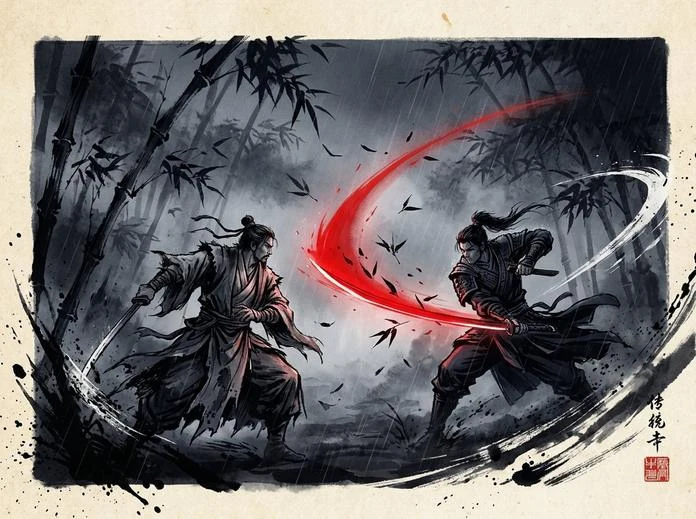
Conversely, the darkest tragedies in wuxia arise when lineage curdles into tyranny: a revered master who secretly framed a disciple's parents, or a prodigy forced to use the very sword style their teacher taught them to sever their own sect's corruption.
⚔️ Why It Matters in Phantom Blade Zero & Where Winds Meet: Lineage Betrayal in The Order & Skill Theft in Where Winds Meet
The entire inciting tragedy of Phantom Blade Zero is a shattered lineage: Soul is framed for assassinating the Patriarch of The Order—the supreme father-figure of his syndicate—turning every former martial brother into a relentless hunter. In Where Winds Meet, you can either honor a formal Shifu or become a Sectless Rogue who uses Skill Theft (偷师) to spy on masters from the shadows and steal their signature ultimates.
Primary Sources & Further Reading
- UNESCO — Taijiquan ↗
- Stephen Teo — Chinese Martial Arts Cinema: The Wuxia Tradition (2009) ↗
- S-GAME — Phantom Blade Zero on Steam ↗