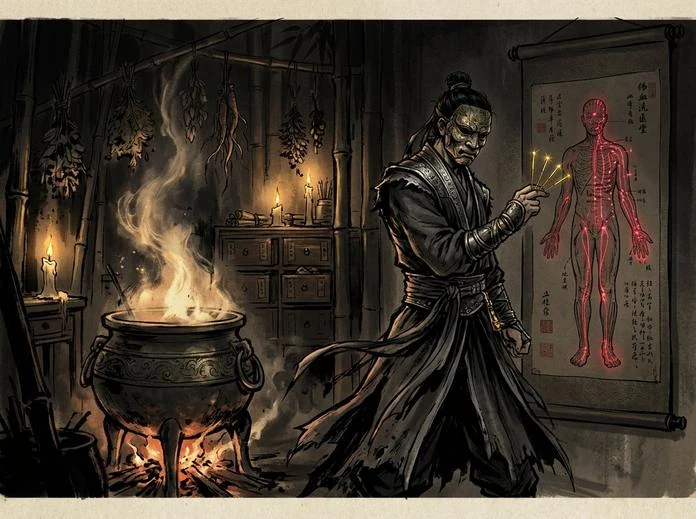
Wuxia vs. Xianxia vs. Murim, Cant of the Jianghu & Internal Cultivation Dojo
Why can't Soul fly on a cloud to cure his 66-day heart curse? How do wanderers in Where Winds Meet signal each other using three porcelain teacups? Explore our four-genre comparison matrix, test the Teacup Cipher Decoder, pluck the 5-Tone Guqin Zither, and inspect the Eight Extraordinary Meridians below.
Difference Between Wuxia, Xianxia, Murim & Kungfupunk
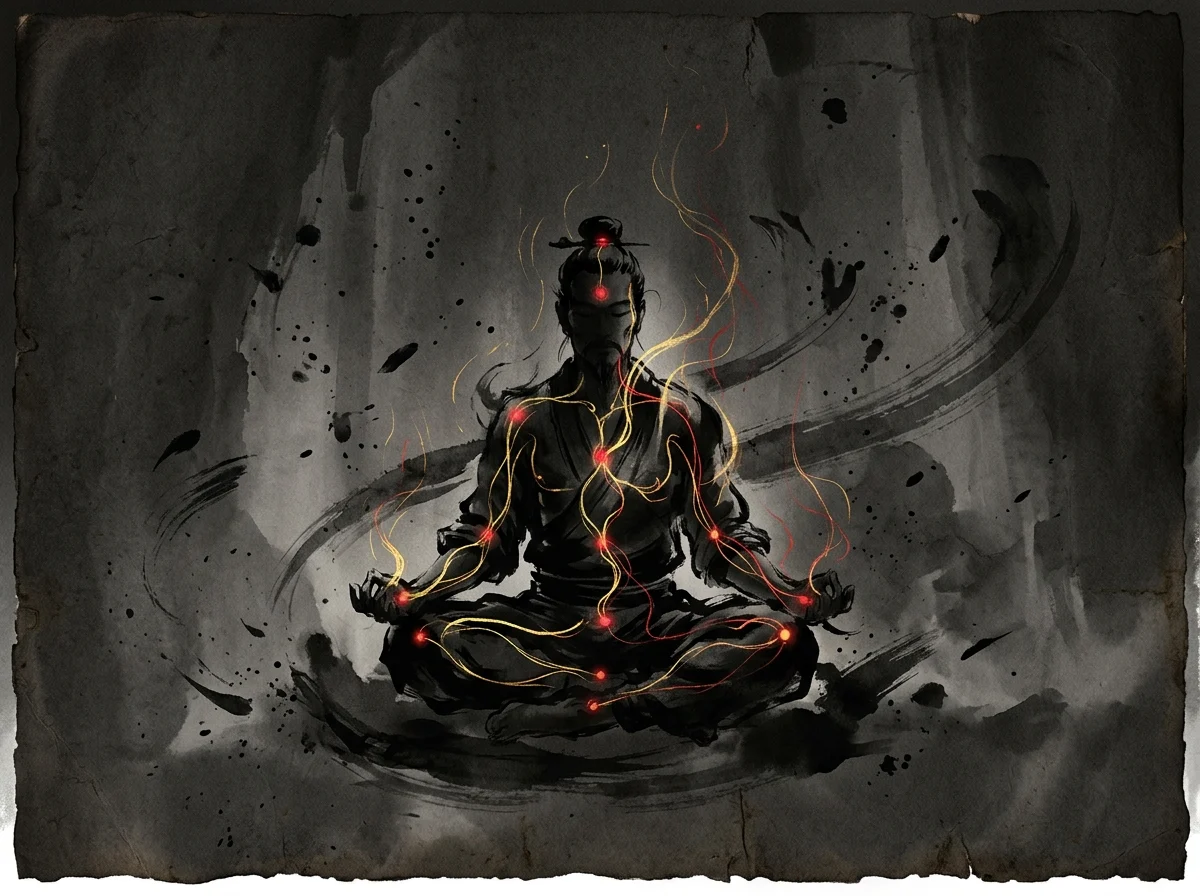
Confused by how Phantom Blade Zero, Where Winds Meet, Black Myth: Wukong, and Korean martial arts webtoons relate to one another? This side-by-side matrix breaks down their power systems, mortality rules, and cultural roots.
| Dimension | 🗡️ Classic Wuxia (武侠) Wǔxiá · Martial Chivalry |
🩸 Dark Kungfupunk (功夫朋克) Gōngfu Péngkè · S-GAME |
☁️ Xianxia & Shenmo (仙侠/神魔) Xiānxiá · Immortal Cultivation |
📜 Korean Murim (무림 / 武林) Murim Manhwa & Webtoons |
|---|---|---|---|---|
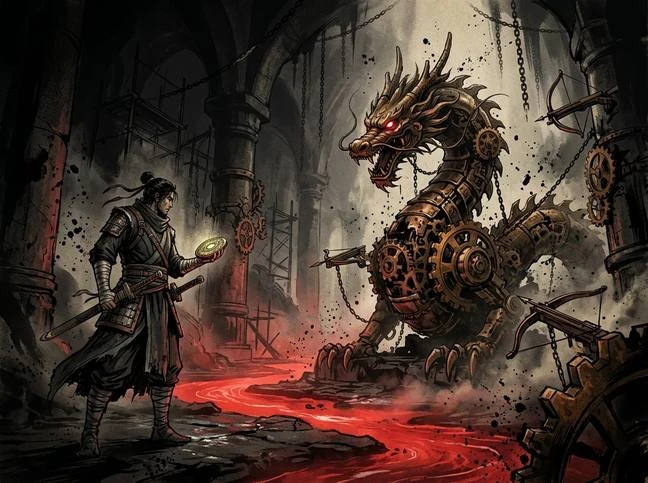
| Core Power Source | Internal Breath (Neigong / Qi), open Meridians, weapon technique & acupoint strikes (Dianxue). | Murderous Aura (Sha-Chi · 杀气), brass clockwork limbs, puppet strings & cursed heart transplants. | Spiritual Essence (Lingqi), Golden Cores (Jindan), Nascent Souls, cosmic Dao & divine artifacts. | Dantian Qi & Aura Blades combined with modern manhwa regression, status windows, or Heavenly Demon bloodlines. |
| Mortality & Scale | 100% Mortal Humans. Heroes bleed, age, suffer poison, and die for sworn oaths. | Terminal Countdown. Soul has 66 days to live; trading humanity for mechanical burst risks Qi Deviation. | Immortals, Gods & Demons. Millennia-long lifespans, flying across stars, shattering mountains. | Superhuman Martial Masters. Starts grounded in sect tournaments, often escalates to semi-divine realms. |
| Movement Style | Qinggong (轻功): Wall-running, rooftop leaps, bamboo-tip balancing & water-skimming. | Ghoststep & Vaulting: Lightning step-cancels, pillar-sprinting, and grappling hooks in rain-soaked alleys. | 禦剑飞行 (Sword Flight): Riding hovering flying swords across clouds and teleporting through realms. | Cheonlibo (Thousand-Li Step): Supersonic dash steps leaving afterimages across tournament arenas. |
| Flagship Games, Books & Films | Where Winds Meet, Crouching Tiger Hidden Dragon, Jin Yong & Gu Long novels. | Phantom Blade Zero, Rainblood series, Tsui Hark's The Blade (1995). | Black Myth: Wukong, Tale of Immortal (鬼谷八荒), Jade Dynasty. | Return of the Mount Hua Sect, Nano Machine, The Breaker, Legend of the Northern Blade. |
Atlas of the Jianghu: The Great Sects, 7 Martial Realms & Teacup Secret Codes
Why do martial artists in Phantom Blade Zero and Where Winds Meet fight to the death over sect manuals and teacup gestures? Explore the three faction alignments of Wulin, the 7-tier power ladder, and test the interactive Teacup Cant Formation below.
The 7 Realms of Martial Mastery
Tavern Teacup Code & Cant Simulator
In classical Wuxia and Where Winds Meet, wandering heroes test strangers in frontier taverns using secret Teacup Formations (Cha Wan Zhen) and coded slang. Click a formation below to see what message you are sending—and how to answer without drawing blood:
The Challenge: An innkeeper arranges three teacups in a triangle to ask if you belong to a righteous brotherhood or are an imperial spy.
Correct Jianghu Reply: Lift the middle cup with your thumb and index finger while reciting "Within the Four Seas and Five Lakes, all wanderers are brothers" (Wuhu Sihai). Drinking the left cup instead signals a fight to the death!
The Five-Tone Guqin Zither & Meridian Resonance Studio
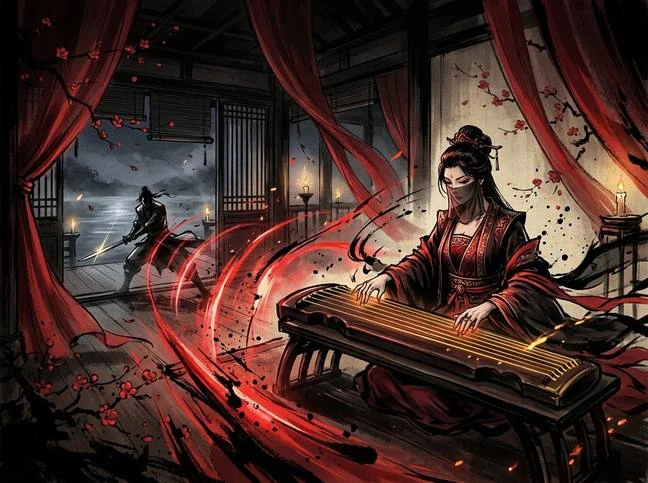
In classical Wuxia (Smiling, Proud Wanderer, Kung Fu Hustle, Where Winds Meet), ancient Chinese music is not mere entertainment—the Five Pentatonic Tones (Gong, Shang, Jue, Zhi, Yu) directly vibrate the five internal organs and meridians. Pluck any silk string below to hear real-time physical-modeling Guqin harmonics (tuned to modern concert C4–A4 pentatonic reference for classical Sanfen Sunyi ratios) and see its martial & medical effect according to the Yellow Emperor’s Inner Canon (Huangdi Neijing):
Combine 3 notes to weave a classic Jianghu Zither Secret Art (e.g., Tranquil Heart Mantra or Six-Fingered Blade Wave).
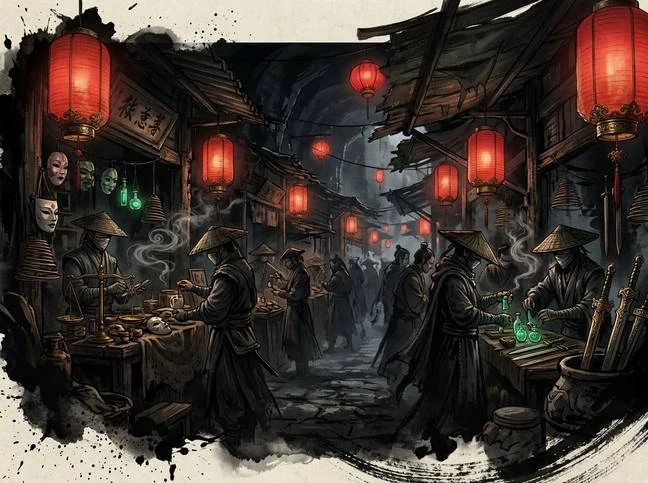
The Grand Jianghu Encyclopedia: Professions, Mystic Arts, Underworld & Essential Books
The Anatomy of Wuxia Power: Three Dantians, Eight Extraordinary Meridians & Qi vs. Sha-Chi
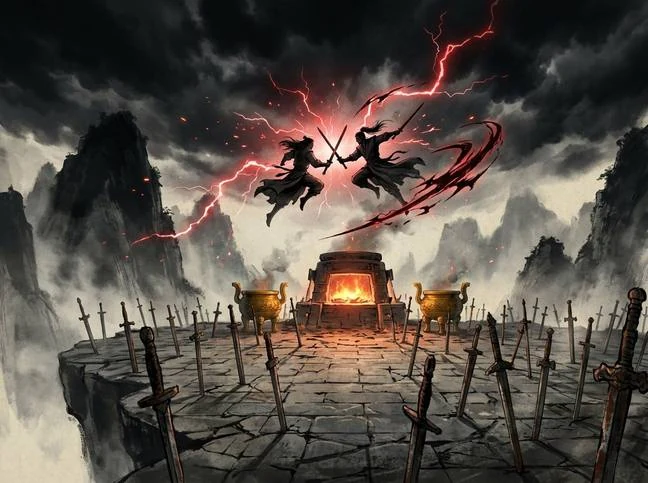
Western fantasy relies on external mana; Chinese Wuxia treats the human body itself as an alchemical furnace. Click any glowing meridian node on the interactive scroll below to inspect how martial artists circulate Inner Qi, strike lethal Acupoints (Dianxue), or risk Qi Deviation (Zouhuo Rumo).
Click Any Node to Inspect Acupoint
Lower Dantian (Qihai — The Sea of Qi)
Located three finger-widths below the navel, the Lower Dantian ("Elixir Field") is the core battery of every Wuxia martial artist. When a fighter practices Neigong (Internal Cultivation), they do not train mere muscle fibers—they compress breath and bio-energy into the Lower Dantian until it ignites as Zhenqi (True Internal Qi). A master with a full Dantian can project invisible blade aura, shrug off poison, and leap across rooftops using Qinggong.
When an enemy shatters your Dantian or seals your acupoints with Dianxue (Pressure-Point Strikes), your internal Qi scatters—leaving you unable to channel special attacks until your meridians are unblocked.
Breathing & Qi Flow
Cultivates internal energy through meditation and meridian circulation (e.g., Nine-Yang Manual). Allows fragile scholars or old masters to overpower giants.
Tendon, Bone & Blade
Tempers skin, iron palms, and weapon choreography (e.g., Shaolin Golden Bell or heavy sabers). Without Neigong backing it, pure external strength hits a mortal ceiling.
Acupoints & Weightlessness
Dianxue strikes meridian nodes with a finger or hilt to paralyze foes instantly; Qinggong vents Qi through the soles to run vertically up rain-slick walls.
Anatomy of a Double-Edged Jian (剑)
Click any component below to inspect how a traditional Chinese straight sword balances thrusting precision with parrying resilience:
Blade Ridge & Edge (剑身 / 剑脊): Divided into three zones: the razor-thin front third (Jianfeng) for arterial flick-cuts, the middle belly for sliding deflections, and the thick lower forte near the guard for parrying heavy sabers.
Read Field Note 24: Anatomy of a Chinese Sword ↗How a Wuxia Leap Becomes Weightless Flight
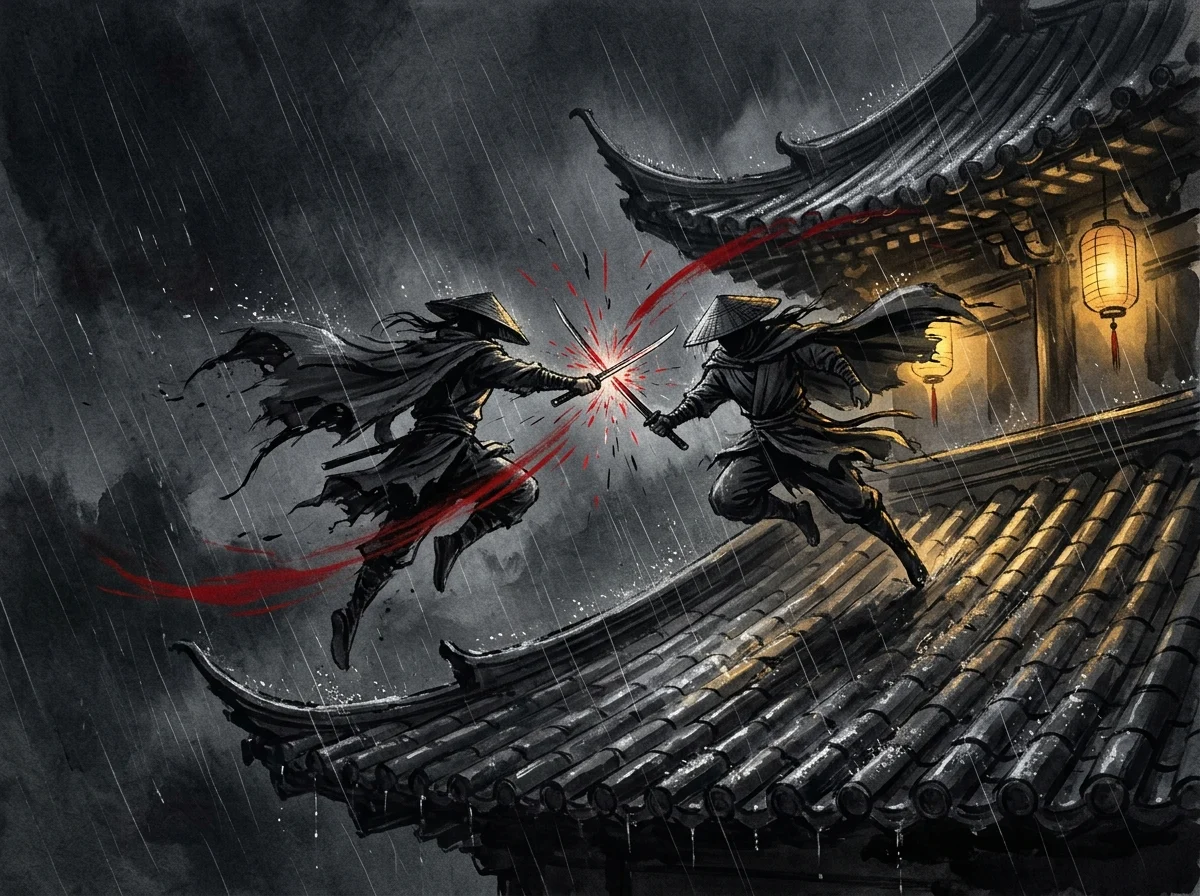
In both King Hu's cinema and Phantom Blade Zero, Qinggong (轻功) never floats aimlessly like superhero flight—it chains four crisp kinetic phases: 01. Coiled Anticipation → 02. Vertical Wall-Kick → 03. Mid-Air Blade Clash → 04. Whisper-Light Roof Tile Landing.
Read Field Note 15: Qinggong — The Art of Lightness ↗