Literary origins and the screen
King Hu made swordplay scenes in which architecture, stillness and movement bear as much dramatic weight as combat. In Come Drink with Me and Dragon Inn, an inn can become a world of shifting alliances; in A Touch of Zen, action serves a larger moral and spiritual design.
The work of interpretation
The BFI describes Hu's use of measured pauses and carefully planned movement. Stephen Teo examines the prominence of female knight-errant figures in Hu's films. Their analysis offers a way to watch beyond the speed of the cuts.
Watch with a question
Study a doorway in a Hu sequence. Who crosses first? Who waits? When does the camera allow the space to open? An attempt to imitate a signature shot without studying those dramatic relationships loses what made the staging work.
Stillness Before the Flash of Steel: Come Drink with Me, Dragon Inn & A Touch of Zen
Before King Hu (胡金铨, 1932–1997), screen fights often consisted of two actors standing in a static medium shot clashing props until one fell down. With Come Drink with Me (大醉侠, 1966), Dragon Inn (龙门客栈, 1967), and the Cannes-honored masterpiece A Touch of Zen (侠女, 1971), Hu reinvented how action is staged in space and time.
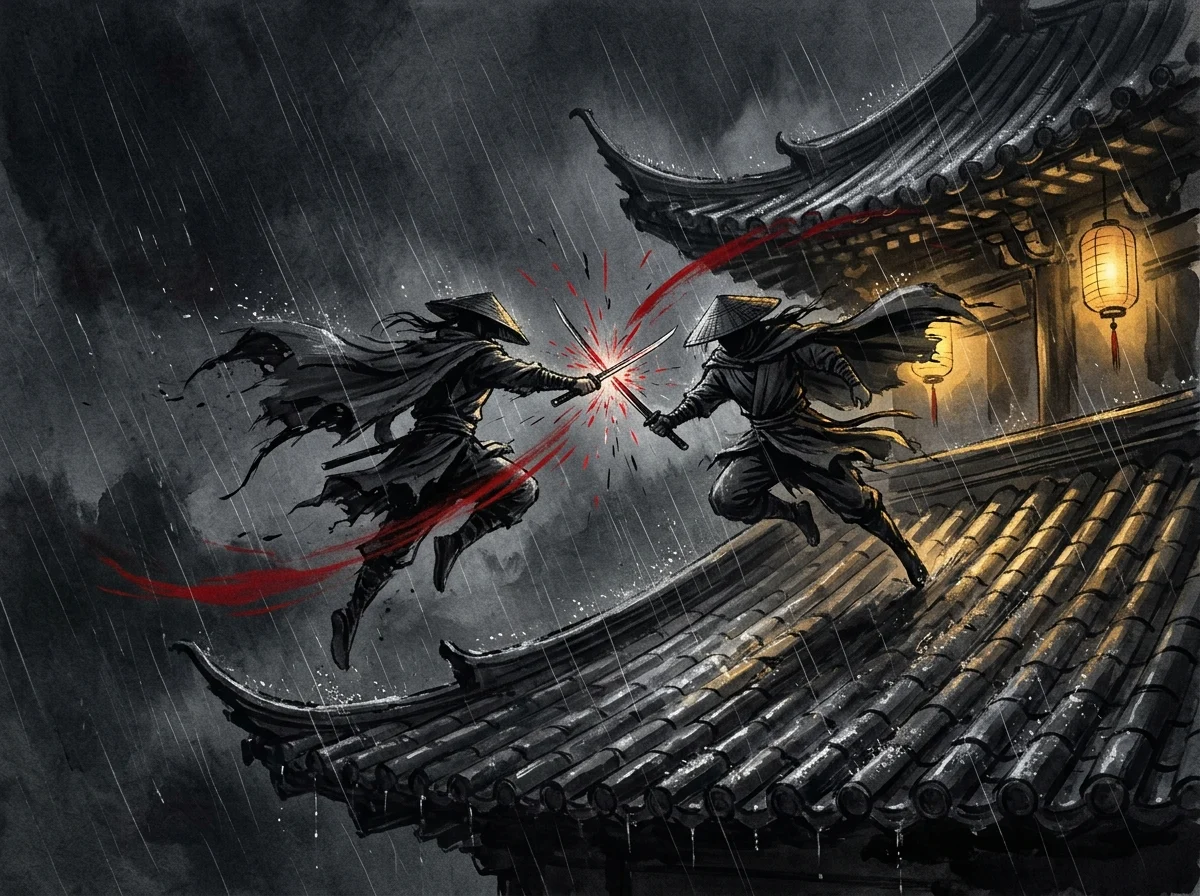
Drawing from the rhythmic pauses (Liangxiang, 亮相) and percussive clappers of Peking Opera rather than Western boxing, Hu treated combat as dance and geometry. He spent twenty minutes of screen time mapping the balconies, staircases, and wind-blown banners of an inn—holding the fighters in taut stillness while their eyes locked—so that when the blades finally flashed across three frames of film, the release of tension felt explosive.
His bamboo-forest sequence in A Touch of Zen—where fighters dive vertically from sunlit canopies through drifting mist—became the direct blueprint for Crouching Tiger, Hidden Dragon, House of Flying Daggers, and every bamboo duel in modern gaming.
⚔️ Why It Matters in Phantom Blade Zero & Where Winds Meet: Bamboo Forest Standoffs & Opera-Rhythm Combat
When you clash blades amidst swaying stalks in Phantom Blade Zero or pause in a sudden camera freeze after a lethal counter-slash, you are experiencing King Hu's signature stillness-to-explosion rhythm translated into interactive frame data.
Primary Sources & Further Reading
- British Film Institute — Where to Begin with King Hu ↗
- Stephen Teo — Chinese Martial Arts Cinema: The Wuxia Tradition (2009) ↗
- S-GAME — Phantom Blade Zero on Steam ↗