Meaning and historical frame
Modern publishing often distinguishes wuxia, centred on martial heroes, from xianxia, where immortal cultivation and transformations of cosmological power are more central. The boundaries shift between authors, platforms and readers. A work can borrow ideas from both without being reducible to a checklist of powers.
How the term travels
Wuxia can contain impossible leaps and esoteric teachings. Xianxia may still care about loyalty, revenge and social obligation. Comparing what bodily limitations mean, how time passes, and whether transcendence changes the hero's responsibilities is more illuminating than counting spells.
Read it in a scene
Writers and games also borrow from mythology, popular religion and fantasy. Treat their invented cultivation systems as systems of fiction. They cannot establish that historical people achieved flight or immortality by training the way a protagonist does.
Wuxia vs. Xianxia vs. Murim: The Definitive Genre Compass
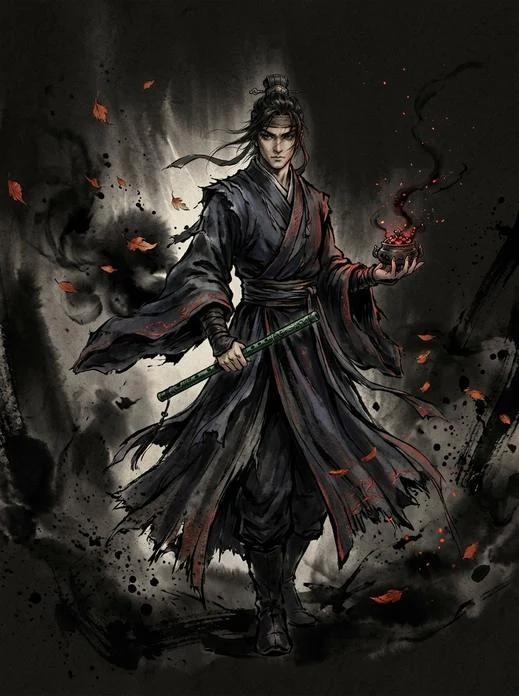
For global players discovering Chinese action RPGs after Black Myth: Wukong, Phantom Blade Zero, and Where Winds Meet, distinguishing Wuxia from Xianxia (and Korean Murim) is the single most useful lore key. In Wuxia (武侠, Martial Chivalry), characters are mortal humans. Even the greatest grandmaster can bleed from a poisoned dart, age, and die. Their power comes from disciplined physical training, weapon mastery, and internal breath control (Neigong) circulating through human meridians.
In Xianxia (仙侠, Immortal Heroes—inspired by Daoist internal alchemy and mythological epics like Investiture of the Gods), practitioners cultivate spiritual essence over thousands of years to defy death, ride flying swords across clouds, forge Golden Cores (Jindan), and battle heaven's lightning tribulations. Related to Xianxia is Shenmo (神魔, Gods and Demons), the mythological genre of Journey to the West and Black Myth: Wukong.
Meanwhile, Murim (무림) is the Korean pronunciation of the exact Chinese characters Wulin (武林). Korean manhwa and webtoons inherited Chinese wuxia sects (like Mount Hua, Shaolin, Tang Clan, and the Heavenly Demon Cult) and blended them with modern dungeon/leveling tropes.
⚔️ Why It Matters in Phantom Blade Zero & Where Winds Meet: Where Do Phantom Blade Zero & Where Winds Meet Sit on the Scale?
Both Phantom Blade Zero and Where Winds Meet are firmly rooted in Wuxia—not Xianxia. Soul cannot fly on a magical cloud to escape his 66-day heart curse; every rooftop leap (Qinggong) and blade parry is anchored in mortal bone, steel friction, and volatile Sha-Chi energy.
Primary Sources & Further Reading
- Stephen Teo — Chinese Martial Arts Cinema: The Wuxia Tradition (2009) ↗
- Stanford Encyclopedia of Philosophy — Laozi ↗
- S-GAME — Phantom Blade Zero on Steam ↗