Relationships and obligations
Sworn brotherhood is powerful because it makes a chosen bond compete with kinship, state service and personal conscience. Oath scenes appear in Chinese literature in varying forms. Their emotional familiarity should not be mistaken for evidence of one standard ceremony or one historical sworn organisation.
Evidence for the practice
The common story of three friends pledging loyalty presents a moral ideal; later retellings can use it to justify generosity or disastrous obedience. An oath can protect vulnerable people by pooling resources, and can also exclude strangers.
Read the consequences
A useful close reading follows what a promised person is allowed to demand. In The City at the Border, a promise to Mei creates a future obligation when she goes missing. The plot remembers the act without granting a generic virtue bonus.
'Not Born on the Same Day, Yet Willing to Die on the Same Day'
From the Peach Garden Oath of Romance of the Three Kingdoms to the 108 outlaws of Water Margin, Chinese martial culture elevates chosen kinship (Jiebai, 结拜, or Yijie Jinlan, 'binding righteousness as strong as metal and fragrant as orchids') to sacred status. In the precarious world of the Jianghu, where wanderers leave their ancestral clans behind, sworn brothers and sisters become one's only shield against the night.
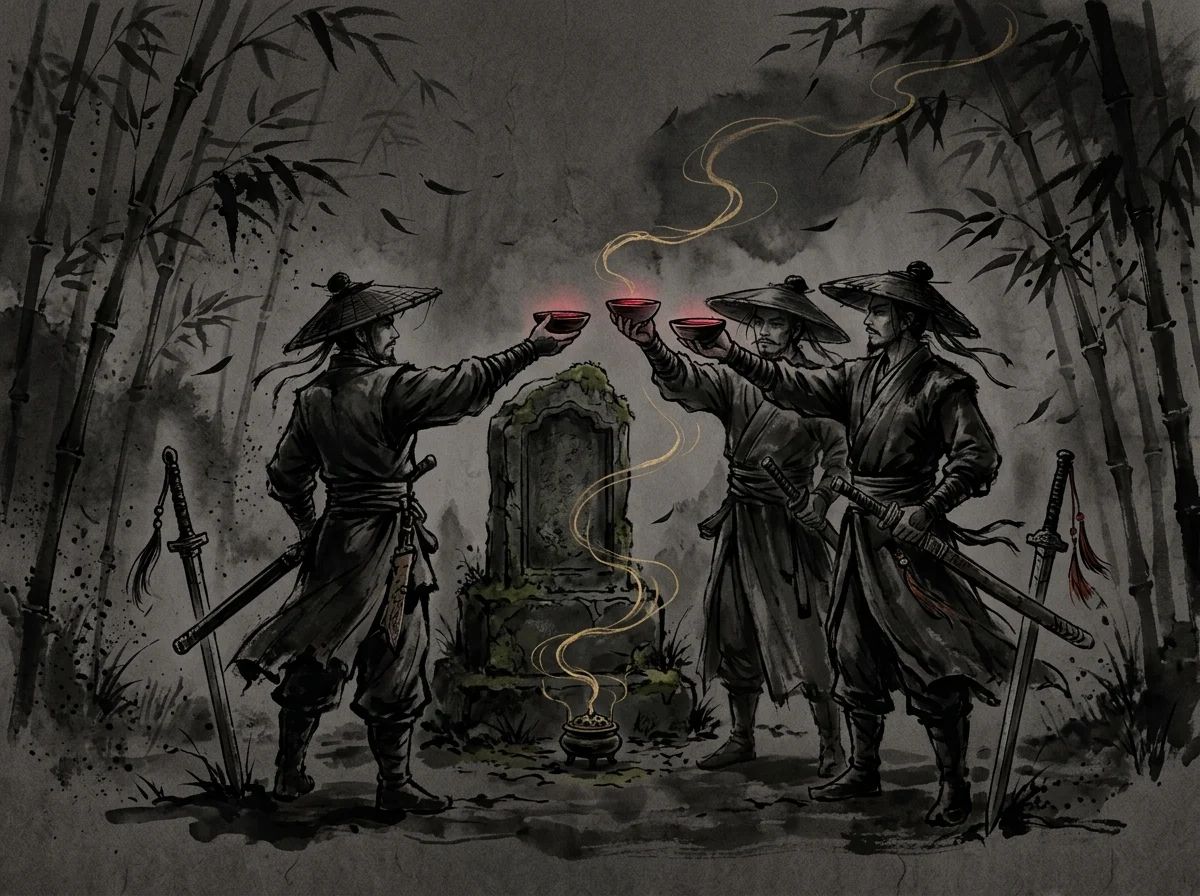
The ritual is visceral and unforgettable: participants prick their fingers, let drops of blood merge inside ceramic bowls of strong sorghum liquor, drain the bowls together, and smash the clay against the stones. Once sworn, a brother's debt is your debt, and his enemies are your enemies.
Yet as Taiwan wuxia master Gu Long demonstrated in masterpiece after masterpiece—most famously Meteor, Butterfly, Sword (流星·蝴蝶·剑) and Heroes Shed No Tears—nobody can stab you in the heart from closer range than a sworn brother. The deeper the oath, the sharper the knife when ambition or blackmail fractures the brotherhood.
⚔️ Why It Matters in Phantom Blade Zero & Where Winds Meet: Blood Oaths & Brotherly Treason in Phantom Blade Zero
The emotional spine of the entire Phantom Blade series—from Soulframe Liang's indie debut Rainblood to Phantom Blade Zero—is the tragedy of sworn comrades turned mortal enemies. Soul's deadliest pursuers are not nameless monsters, but former blood-brothers and elite executioners of The Order who once drank from the same wine jar before framing him at the Patriarch's altar.