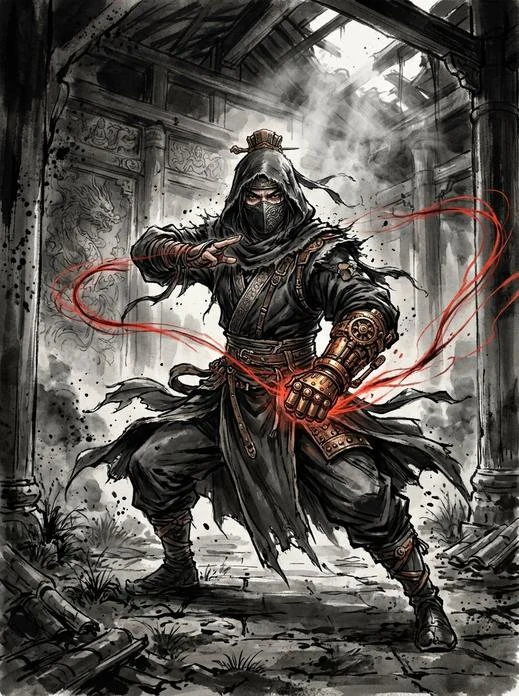
Modern design vocabulary
Action games let a player perform a fight that a film viewer can only watch. Input timing, camera lock, encounter design and animation readability help turn an authored martial fantasy into decisions under pressure. The rules depend on the game and its update version.
From inherited image to new medium
Contemporary titles often attach fictional martial schools to progression or storytelling. It is useful to ask how a quest makes a teacher, stranger or faction matter mechanically. That design question does not turn the fictional organisation into a historical one.
Comparison without confusion
This atlas links a modern game interest to cultural reading rather than claiming that a particular studio directly borrowed a specific historical event without attribution. We do not reuse a game's character assets or gameplay footage.
Is Phantom Blade Zero a Soulslike? High-Speed Wuxia Combo Design Explained
For over a decade, Western action RPGs were dominated by the 'Soulslike' formula: deliberate, heavy single swings, strict green stamina bars, punishing roll-iframes, and a lone tarnished knight trudging through quiet ruins. When global players first saw Phantom Blade Zero, many assumed it was 'Chinese Bloodborne.' In reality, true wuxia combat demands the exact opposite kinetic philosophy.
In a wuxia duel, fighters do not swing once and roll away; they lock blades in a continuous, twenty-hit storm of parries, wrist-traps, wall-runs, and mid-combo weapon swaps—what Hong Kong choreographers call 'flowing water and行云 (drifting clouds).' To make that playable without requiring fighting-game claw-grip inputs, S-GAME pioneered a dual-chain combo architecture evolved from Devil May Cry, Ninja Gaiden, and Metal Gear Rising.
Instead of a green stamina bar that punishes attacking, combat revolves around the dynamic Sha-Chi posture/energy gauge: aggressive blade pressure, timed Deflects (which avoid the 1.2-second regeneration lock), and Ghoststep counters reward players who fight like a fearless martial master.
⚔️ Why It Matters in Phantom Blade Zero & Where Winds Meet: Mastering Parries, Ghoststep & Mid-Combo Weapon Swaps in PBZ
In Phantom Blade Zero, you equip 2 Primary Weapons and 2 Phantom Edges simultaneously. By swapping blades mid-combo, you cancel recovery frames, extend air-juggles, and trigger Power Surges. Unsure which weapon pair fits your reflexes? Run our Interactive PBZ Playstyle Weapon Matcher.
Primary Sources & Further Reading
- S-GAME — Phantom Blade Zero, Steam store description ↗
- Stephen Teo — Chinese Martial Arts Cinema: The Wuxia Tradition (2009) ↗
- S-GAME — Phantom Blade Zero official website ↗