Modern design vocabulary
Folk horror in a wuxia world can make the familiar social spaces of a journey suddenly uncertain: a shrine, lodging house, mountain road or family ritual. Folklore is a varied record of local storytelling and practice, not a single toolbox of monsters available across all Chinese cultures and eras.
From inherited image to new medium
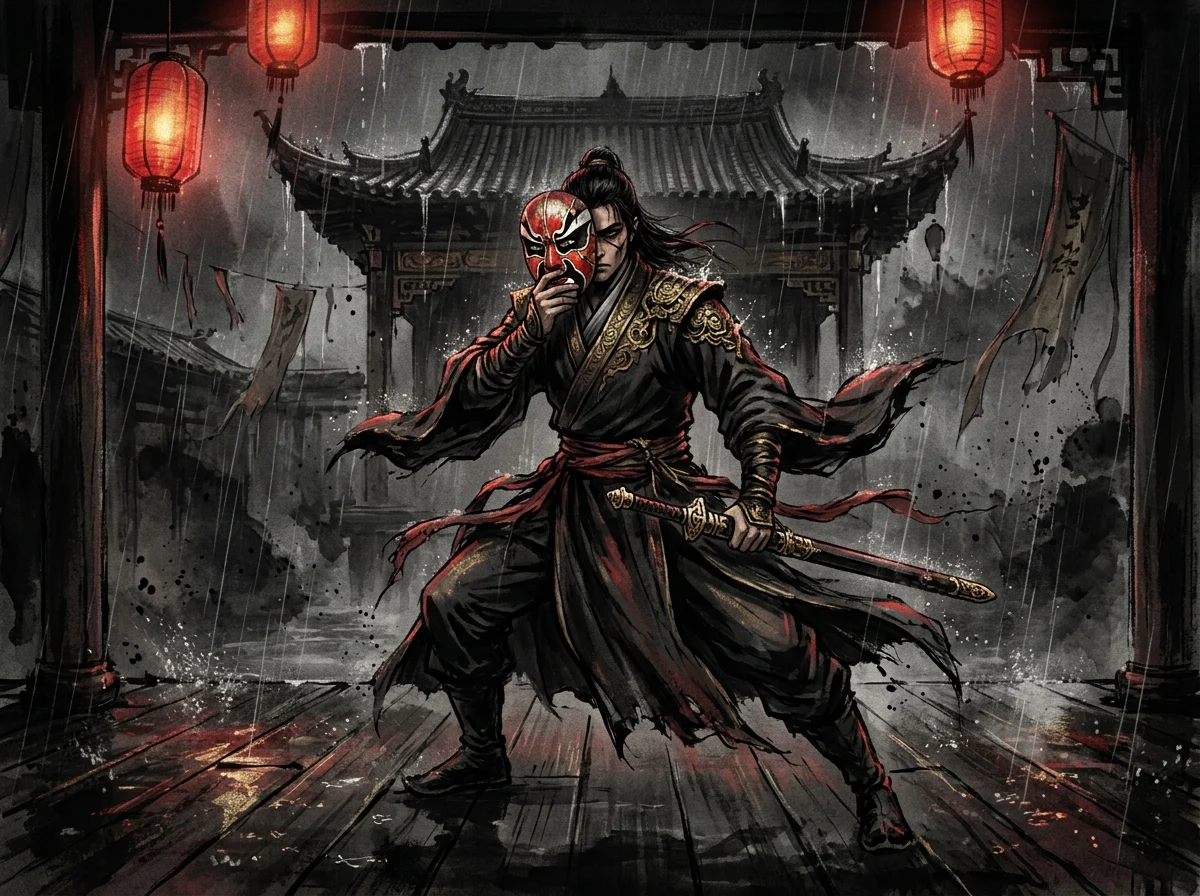
Designers may combine a dramatic silhouette, unsettling architecture and costume to create a fictional tradition. If a scene resembles a particular regional rite, that identification requires evidence beyond a social-media caption.
Comparison without confusion
A responsible guide names the work and the actual source before making claims of inspiration. A safe artistic comparison can instead ask what unease does to a wanderer's duties: does fear encourage abandonment, or bind strangers more tightly together?
Red Paper Weddings, Corpse-Walkers, and the Uncanny Countryside
Why does a red bridal sedan chair carried through a misty bamboo forest at midnight send a deeper chill down the spine than any Western werewolf? Because Zhongshi Minsu Kongbu (中式民俗恐怖, Chinese Folk Horror—rooted in Six Dynasties Zhiguai tales and Pu Songling's Strange Tales from a Chinese Studio) twists the most sacred rituals of family life—weddings, ancestral funerals, opera offerings, and village harvest rites—into something uncanny.
In traditional folklore, red (Joy / 喜) and white (Mourning / 丧) are strictly separated; when red wedding candles burn beside cliffside coffins or paper-mâché funeral servants (Zhazhi, 扎纸) begin moving on puppet strings, the natural order of Yin and Yang has ruptured.
When blended with dark wuxia, folk horror is rarely pure supernatural magic: behind the weeping mountain deity or the haunted scarecrow almost always lies a tragic human conspiracy—a village poisoned by Sha-Chi experiments or a grieving puppeteer refusing to let the dead rest.
⚔️ Why It Matters in Phantom Blade Zero & Where Winds Meet: Village of Lu, Wedding Candles & The Human-Faced Banyan in PBZ
Folk horror is woven into Phantom Blade Zero's most memorable quests: collecting the Six Firefly's Memory Flowers around the Village of Lu to enter the Temple of the Blue Fireflies and battle Dusk, the Puppeteer; recovering Quick Hand Zhang's Wedding Candles relic; or boating across Meigu Lake to confront the eerie Human-Faced Banyan Tree and cliffside coffins of the Discordance Realm.
Primary Sources & Further Reading
- S-GAME — Phantom Blade Zero, Steam store description ↗
- UNESCO — Intangible Cultural Heritage register ↗