Literary origins and the screen
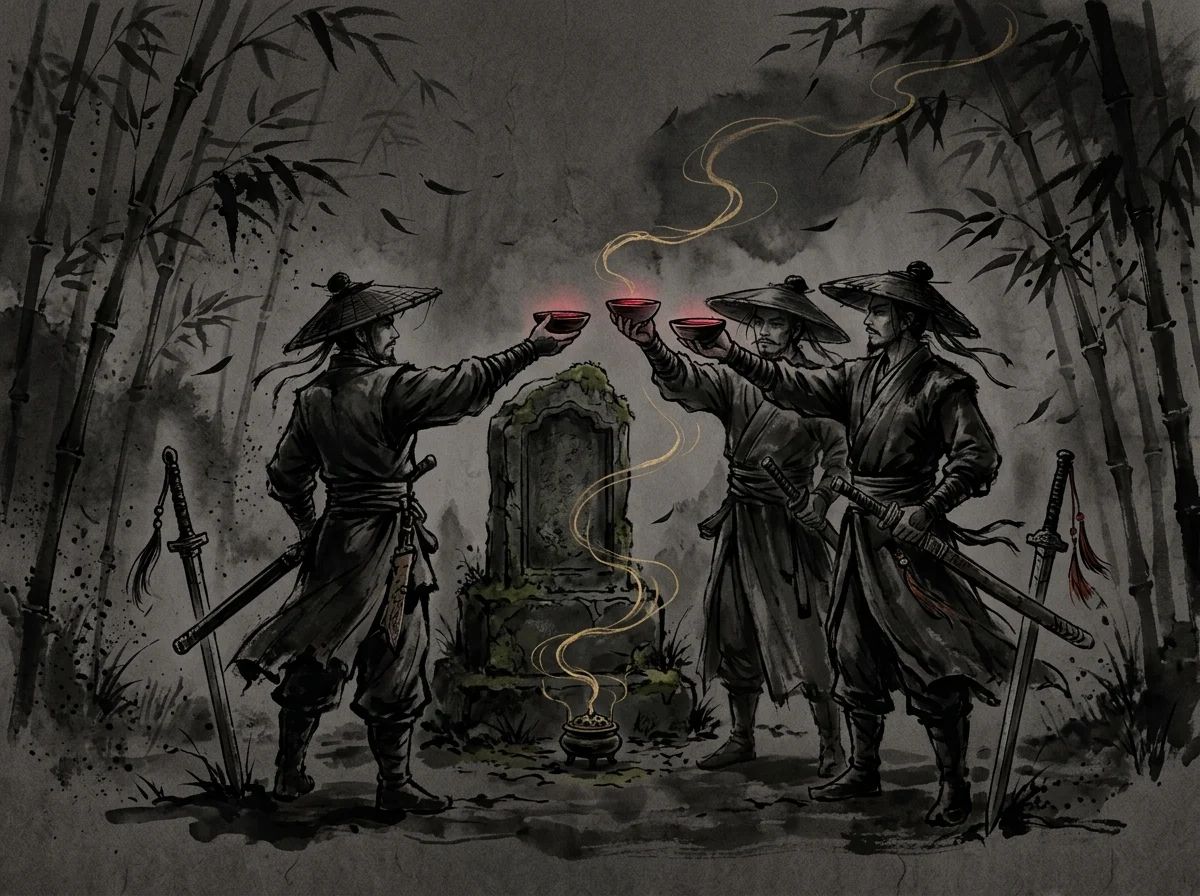
Youxia, wandering knights, appear in early written sources whose authors were already interpreting the people they described. Sima Qian's biographies preserve social and moral tensions as well as memorable individuals. The category does not refer to one homogeneous profession with a membership card.
The work of interpretation
The writer's attitude matters. Praise for keeping a promise may sit beside concern about private coercion. A later novel can reuse the term while shifting the social circumstances entirely. When possible, read both a passage and information about when the account was composed.
Watch with a question
Historical sources describe people through selection and narration; they do not offer an unrestricted window into their thoughts. The distance between a recorded act and a modern hero's internal monologue is precisely where responsible historical fiction states its inventions.
Jing Ke's Dagger in the Map and Guo Jie's Underground Network
Wuxia did not spring out of thin air in the 20th century; its DNA was recorded in the Warring States and Qin-Han transition (4th–1st centuries BCE). In Chapters 86 and 124 of the Shiji (Records of the Grand Historian), Sima Qian preserved the lives of the Cike (刺客, Assassin-Retainers) and Youxia (游侠, Wandering Knights).
Here we meet Jing Ke, who sang by the freezing Yi River ('The wind blows萧萧, the Yi water is cold; once the壯士 goes, he never returns') before unrolling a map scroll in the court of the King of Qin to reveal a poisoned dagger; Nie Zheng, who mutilated his own face after a successful assassination so his sister would not be implicated; and Zhu Jia and Guo Jie, commoner knights whose private networks sheltered fugitives across the empire.
These early historical accounts established the core aesthetic of Chinese martial tragedy: intense personal loyalty to one who truly recognizes your worth (士为知己者死), paired with unflinching readiness to walk into a one-way death trap.
⚔️ Why It Matters in Phantom Blade Zero & Where Winds Meet: From Ancient Cike to Soul's One-Man War
Soul's character design in Phantom Blade Zero—dressed in rain-darkened robes, straw hat, and carrying concealed twin blades into heavily fortified estates—is a direct modern heir to Sima Qian's Cike (Assassin-Retainers). You can also experience a grounded Warring States border-city investigation in our Warring States Historical Chronicle.