Body, training and fiction
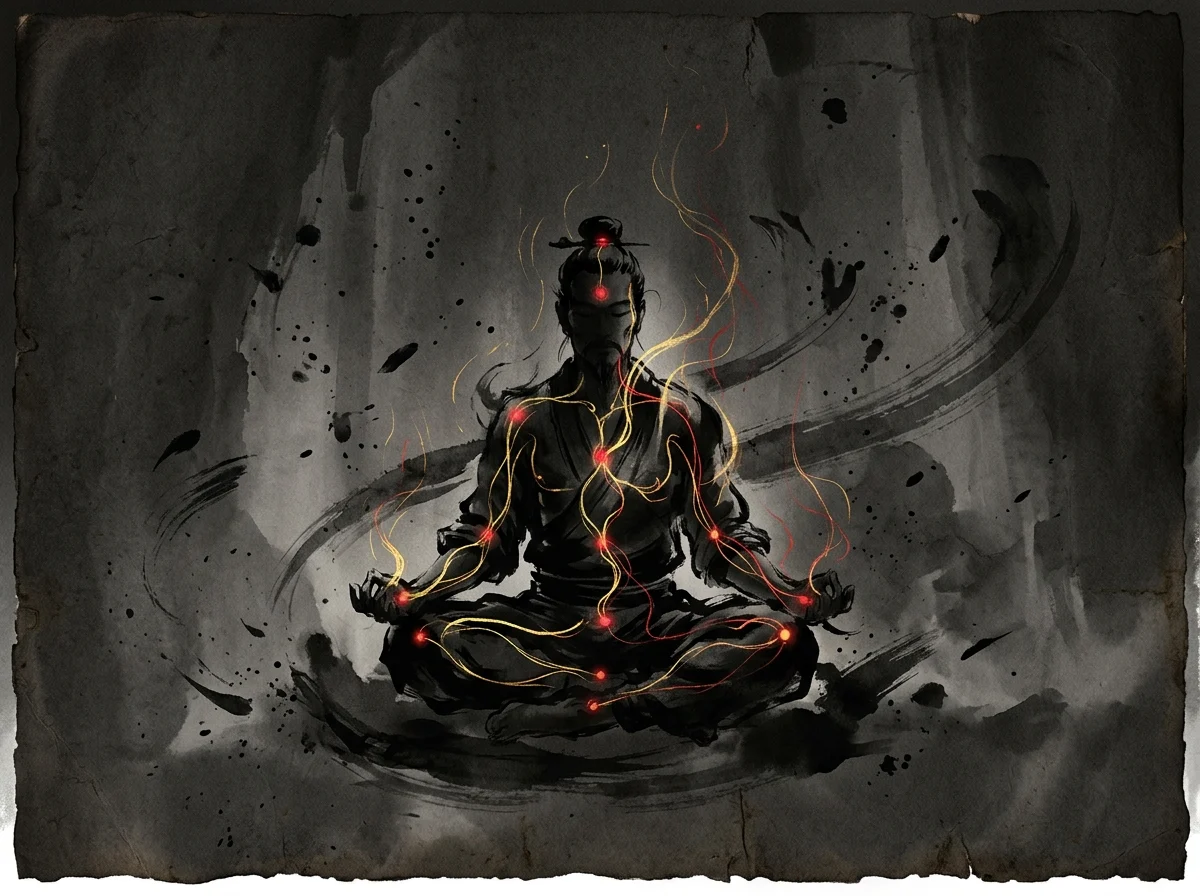
Qi has meanings across Chinese philosophy, medicine, aesthetics and everyday speech. Neili, inner strength, functions differently as a specialised term in many modern martial stories. Translating both simply as energy hides differences between intellectual traditions and authored fictional systems.
Claims and their limits
A novel may depict a reservoir of power that characters spend or transfer. That offers a consistent way to stage a duel and a recovery scene. It should not be offered as a measurable medical resource or a verified property of a real body.
Interpret the portrayal
When reading the original Chinese terms, note the surrounding practice and the date of the text. A modern action game can inherit a vocabulary without reproducing the claims or meanings of a classical source.
How Vital Breath Becomes Sword-Qi (Jianqi) in Martial Fantasy
Few Chinese concepts are as rich—or as frequently misunderstood in translation—as Qi (气). In everyday Mandarin, classical philosophy, calligraphy, and traditional medicine, qi ranges from literal breath and weather ('air') to vital life force, emotional temperament, and artistic spirit. Everyone possesses qi simply by being alive.
Neili (内力, 'Internal Force' or 'Inner Power'), by contrast, is a specialized martial creation. By circulating breath through the body's meridian channels and storing it inside the Lower Dantian (below the navel), a wuxia practitioner condenses diffuse qi into a dense reservoir of kinetic energy. Neili can cushion fatal blows, purge deadly venoms from the bloodstream, warm a freezing comrade, or project outward through a sword blade as Jianqi (剑气, Sword-Qi) that cleaves stone from ten paces away.
Understanding the difference between pure Qi (harmonious, regenerative) and Sha-Chi (杀气, murderous, corrosive battle-aura born from bloodshed) unlocks the central thematic conflict of dark wuxia.
⚔️ Why It Matters in Phantom Blade Zero & Where Winds Meet: Mastering the Sha-Chi Energy Loop in Phantom Blade Zero
Everything in Phantom Blade Zero's combat revolves around the tension between Inner Qi and Sha-Chi. Perfect parries (Deflects) shave away the enemy's Sha-Chi posture bar while refunding your own energy, whereas dodging red Killer Moves with a timed Ghoststep places you behind the boss to unleash devastating Sha-Chi Power Surges.
Primary Sources & Further Reading
- Stanford Encyclopedia of Philosophy — Laozi ↗
- National Cancer Institute — Acupuncture evidence and safety ↗
- S-GAME — Phantom Blade Zero on Steam ↗