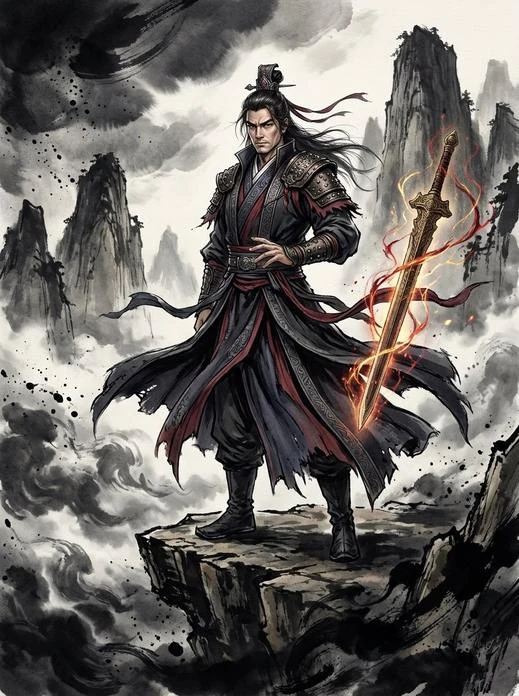
Relationships and obligations
Baishi, accepting a master through a formal relationship, can involve introductions, ritual forms and reciprocal duties. Practices differ among institutions, periods and communities. The often-filmed scene of three bows before a stern elder is not a reliable universal description.
Evidence for the practice
UNESCO's record of taijiquan describes inheritance through clan-based or master-apprentice transmission alongside other modern forms of teaching. That documentation concerns a living practice, not every imagined school in historical fiction.
Read the consequences
When an author stages a discipleship ceremony, ask who witnesses it, who owes care, and whether the apprentice can leave. These questions suggest credible drama without inventing a rigid, supposedly ancient ceremony for all schools.
Tea, Incense, and the Three Years of Testing Character
In traditional Chinese martial lineages (documented in living heritage traditions such as Chen-style and Yang-style Taijiquan), a master does not teach their core internal method to someone who merely pays tuition. Traditional proverbs speak of 'three years the master tests the apprentice, three years the apprentice tests the master.' Only after proving patience and moral steadiness is a student invited to perform Baishi (拜师).
During a formal Baishi ceremony, incense is lit before the ancestral tablets of the school's founders. The initiate kneels, presents the Baishitie (a formal crimson scroll of apprenticeship), and offers a cup of hot tea—Jingcha (敬茶)—with both hands. When the master drinks the tea and hands back a lineage token or weapon, the student receives a generational name character (beifenzi) that places them permanently inside the school's genealogy.
In wuxia storytelling, this ritual is often subverted into high drama: a dying grandmaster transmitting sixty years of inner power in a ruined cave, or a proud wanderer refusing to kneel and choosing the perilous path of self-taught heresy.
⚔️ Why It Matters in Phantom Blade Zero & Where Winds Meet: Initiation Trials & Stolen Techniques in Modern Wuxia RPGs
In Where Winds Meet, each of the 11+ sects demands a unique Baishi trial matching its philosophy—ranging from healing plagued villagers for Silver Needle to pulling off an audacious disguise prank for Nine Mortal Ways. In Phantom Blade Zero, bosses often fight with corrupted variants of orthodox sect lineages, dropping weapons you can reforge into your own arsenal.